The Ultimate Guide to Perfect your Africanness.

We were all born into this without a manual. We just do it, no structure and no handbook. And when one gives you a guide, they do it in a paternalistic manner. They either went to a foreign school, they do not know how things work on the ground, or they are too “woke” to tell us anything. I speak not as an outsider, but as a devoted disciple of this creed, a fellow African, a black African. We have been displaced, starved and rounded together as brothers and sisters. We have been refugees together, crossing borders as tight as the visa queue at a European embassy. I am you, you are me. We are one.
Being part of the flock, I am entitled to teach you, my fellow Africans, the fine and time-honoured craft of how to be African, and The sacred art of blame. Trust me, it is not an easy skill to master. It requires discipline, tradition, and a long memory of colonial injustices. Remember, it is your birthright, your inheritance, your guiding philosophy. And if you even get a tinge of temptation to take responsibility, please sit down, breathe deeply, sigh, and spit towards the fence. Go to your neighbour and drink Busaa, and remember, it is never you. It is Them.
You are the victim. You do not cause problems. You receive them. The universe, the global capitalism, the IMF, your gay son, the weather and your neighbour; all have conspired since the 1800s to ensure that you remain blameless. It is truly a noble burden to be this innocent. You are the chosen one.
To learn this art, I will give you a manual. A well-written manual that is not too intellectual. One that is not ‘woke.’ An easy-to-follow manual, and it does not use unnecessary words such as intersectionality, anti-establishment,heteronormativity or virtue signaling. Read carefully, and if possible, take notes. You might need these as ‘Africans are taking over the world. ‘
Rule Number 1: Make it a competition.
Practice it. While Kipchoge goes to Iten to practice for the London Marathon,go to the nearest kiosk and practice how to blame others. Imagine that the blame is a game of discus. When something goes wrong, as they often do, your first instinct must be to look around for a suitable target. Then, spin the discus wildly and release it into the air. The Olympic rule does not apply here, so you can step out of the discus circle. The crucial thing is to make sure that the blame lands on someone. And if the culprit is someone close, throw it again. Until it hits the “right” enemy.
Your road has a pothole? A colonial leftover, obviously.
Your president built a new mansion? It is the McKinsey consultant who whispered it.
Your electricity went out? The Neo-Imperialist cut the wires.
Political violence? The NGO funded it.
Your cousin stole public funds? Western moral decay, he must have learnt that at Havard.
Is your Wi-Fi slow? Yes, the great white sharks in the Pacific ate the wires.
You see, the misfortune is a carefully orchestrated foreign agencies. Never doubt it. And remember, never underestimate your ancestors’ colonisers. They are magical beings. Capable of controlling everything from your election results to the taste of your packaged milk. Everything, from your non-existent piped water to your newly elected corrupt governor, has an inaudible French accent, and when confronted, be sure their response will be a cultured “c’est la vie.”
Rule Number 2: Make it a lifestyle.
Repeat After me. “We are victims!”. Say it with conviction. Chant it at conferences. Let it drip in your press statements.Cry it into your grant proposals. Wear your Kente shirt and make victimhood your professional calling. You know, to be African in the 21st century, you have to perfect the performance of historical pain. This victimhood is your best foreign policy. It opens donor wallets. It earns you solidarity tweets, or Xs? It ensure the whole world treats you as the tragic continent that you are.
Make sure that you attend all the Africa Rising summits in Berlin. Or the Japan-Africa Conference in Tokyo. There, make sure you speak passionately about neo-colonialism, extractivism, and structural adjustment. Say them slowly, pause and wait for the slow nods. Hmmmmm. Speak until the light dims and the Western guilt fills the room. Let the world know that your suffering is deeply intellectual. And when the applause comes, smile graciously and wipe your tears. Then, when you return home, make sure your ministry loses track of the aid money. Traditions must be honoured.
Rule Number 3: Hire a consultant, preferably foreign.
Whatever you do, never solve your own problems. That is colonial behaviour. No problem is too small to require foreign expertise. Water crisis? Swedish consultants. Poverty? Canadian volunteers. Traffic jams? A Taiwanese PhD student from New York with a drone and a GoPro. Make sure they all come from a country that you can later condemn. Get the most expensive one. Do not worry about the quality of their work, for that is not a priority here. The secret is to mistrust yourself profoundly and pay foreigners handsomely to confirm your helplessness. And when their 255-page report, by mistake, mentions the correct answer that your grandmother already said in Swahili twenty years ago, clap for them. Print it, launch it. Then swindle the project money.
When local experts protest, tell them, “These are global best practices!”
And when the project fails, sigh deeply, shake your head and blame ‘context.’
When in doubt, hold a donor conference. Invite the same countries you denounce for neo-imperialism to design your economic recovery plan.
Ask the UN to draft your gender policy, the EU to train your electoral commission, then rig the election, and invite the retired American diplomat to mediate your inter-tribal conflicts. Because, truly, who knows you better than those who once divided you?
Never trust local knowledge. That is very dangerous. It breeds independence. Eew! That bitter-tasting word. That word reminds us of our past struggles.
Rule Number 4: Worship the Gatekeepers, and their ‘Values.’
Every country needs some little gods. Make sure they are cunning, arrogant and selfish. They are the gods, incapable of doing wrong. Call them visionaries. Give them motorcades and treat their potbelly as a trophy. Allow them to sell your forests, your minerals and your water. Because they know best, and they speak your language.
When they steal, call it development capitalism.
When they silence the press, call it strong leadership.
When they fly private helicopters to launch a mud-built classroom, call it urgency.
When they book five star hotels to attend climate conferences, call it representation.
Make sure that you do all that the gods say. And when they die, replace them with their sons and daughters and worship the worthy successor. Lastly, remember that history must be preserved; name a university after them.
Rule Number 5: Learn to let them eat, as your time will come too.
Pick up the practice of your gods. In their Gospel according to Us, corruption is a survival mechanism. “It is their time to eat, yours will come too.”
When you bribe a police officer, call it a token of appreciation.
When a tender is rigged, say the system is complicated.
When your cousin forges documents to get a scholarship, whisper ‘hustle culture.’
And when you’re mistakenly caught and accused of graft, just shrug. Everyone does it. It is democracy in action. Complain about traffic while buying your way out of a traffic offence. Curse the government as you fake your academic degree. Trust the most corrupt person to deal with corruption. It is called balance.
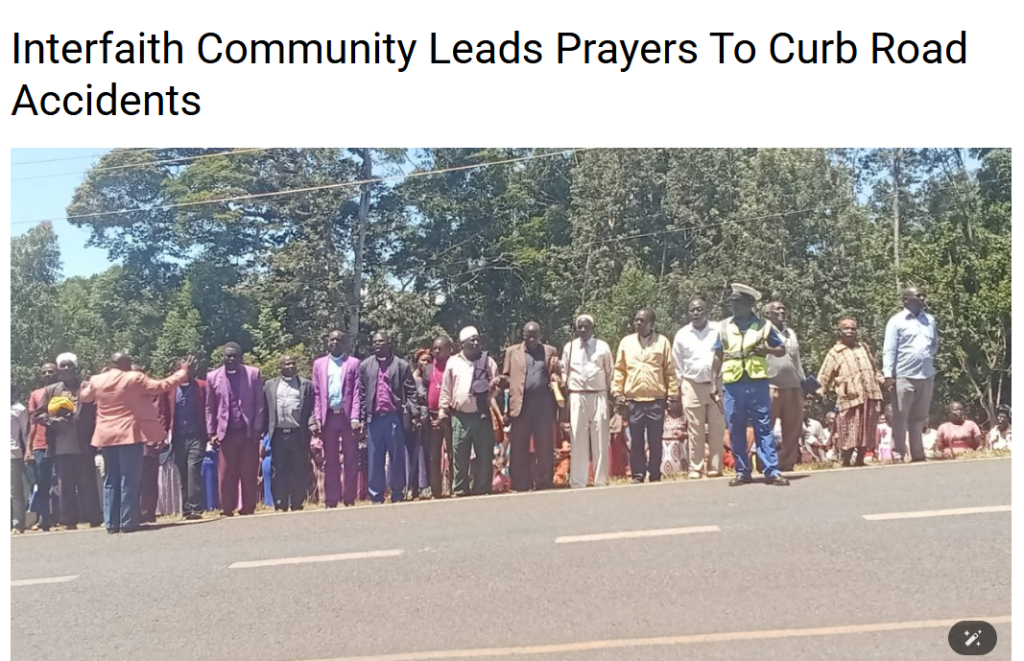
And when everything eventually collapses, hospitals, roads, schools, and dreams ; do not panic. Blame colonial borders (I mean, you didn’t make them, so they are not your fault). They are strong and can stand against anything. If the collapse of the systems leads to death, as they always do, call it a curse, then organise an inter-denominational prayer meeting and cleanse the area of its satanic curse.
Rule Number 6: Romanticise African Values
Ah, Ubuntu! That soft, round word that makes Westerners smile and makes you nostalgic. Say it often, and ensure that you say it correctly with the Bantu Phonetics. Say it with pride. Remember to quote it in speeches. Engrave it in policy papers. Create think tanks based on the philosophy. But whatever you do, never live it. Continue to underpay your housemaid. (Call them house manager, as the name matters.)
Let Ubuntu be studied or used in corporate bonding events. It should never be confused with daily practice. If you happen to see trash in the street, kick it like a football and mutter “community spirit.” If your neighbour is hungry, post an inspirational quote about community and share a spiritual script with them.
“Rejoice in your sufferings, because we know that suffering produces perseverance; perseverance, character; and character, hope.”
Give them hope. Because hope cannot be stolen, but can be multiplied. Celebrate their resilience.
Rule Number 7: Pray for Salvation
When things fall apart(and they will), look upwards and outward. Pray and pray, then go back to your shack or perimeter-walled compound and wait for a miracle, for it always comes. Your God is a God of the needy, and He always listens. You do not have to move a finger lest he be angered that you perceive him weak; let him do the work. In God, We Trust.

Rule Number 8: Deny your Agency, Then Demand Respect.
Cry foul at the West’s disregard, but ensure you remain their most loyal client. African Continental Free Trade Area Agreement? What is that? Smells like incompetence. Do not ratify it. Trade is only trade when done with China. Complain about dependency while requesting a debt restructuring.
Whenever your youth stand and demand for justice, unleash your malice and show them what you are made of. Treat them like terrorists; a threat to democracy that they are. Then, form a committee of inquiry and compensation. They might be dead, but at least their lives can be equated to something very African.
Condemn the UN and demand a seat in it. Mourn imperialism and send your children to schools in the UK. Get treated abroad and do not consider equipping that local clinic. Instead, raise funds for a new church and purchase a new SUV for your pastor.
Remember, contradiction is not hypocrisy; it’s the truest form of diplomacy.
Rule Number 9: Celebrate every Revolution.
Wherever there is a coup, do not think about its cause or effect. Do not even look at the consequences of the new regime. That is being an imperialist. Celebrate when your ‘beret boys” depose the western-style “democratic government’ of thieves. They are the local saviours. Celebrate in the streets and sing revolutionary songs. Burn some tyres at the roundabout and smash a few windows. If you are from the Sahel or West Africa, you can carry the Russian flag and chant some community slogans, because, just like you, they are standing against the West. They are brothers in arms.

If you love philosophy, draw sickles and hammers on your walls and hail the red star as your new symbol of freedom.
Rule Number 10: Be “Foreign”, But Do Not Make it Obvious
Give yourself incomprehensible foreign names. Name your kids after Henry Kissinger, the greatest diplomat and peacemaker. Odongo Omari won’t open doors for him. Not the right doors, at least. Give your towns and countries new relatable names. The Geneva of Africa, the Singapore of Africa. Alter the names a bit if they are too obvious, and you are shy; Silicon Savannah.

This is very creative and original. Remember, they stole from you first, and theirs belongs to you, and yours belongs to you, alone. Always strive to look more foreign, but remember to use your victim privilege when needed.
Rule Number 11: End Every Speech with Hope
When all is said and NOT done. When every thief has looted. When every school is defunded. When the streets are unsafe for every non-violent person. When every youth has fled, end with optimism.
Say: “Africa shall rise.”
Say: “We are resilient.”
Say: “Our time is coming.”
Say “ But have you looked at our true potential?”
Sing the most patriotic songs and remind everyone of your pre-colonial greatness. A destiny that was stolen. Remember that history is a cage, not a context. Do not move from it. Wear the cage as a badge of honour, your long-lost pride. Decorate it with newer flag designs and curate new independence slogans. Write a new constitution, but do not implement it. Hold onto that cage with all your strength, throw the keys away and say that you never had them. A beautiful cage is still a home.
Rule Number 12: Clean the House (or At Least Pretend To)
Now, my dear compatriot. Let us be honest, only for a moment. No one is coming to save you. Not the ghosts of the Mau Mau or your wife’s third cousin in the diaspora who sells Ankara hats on Etsy. The only rescue mission that matters begins with a mirror. But mirrors are inconvenient. They reflect, and reflection is dangerous. It shows the thief, the liar, and the silent witness. And when done, they break into tiny pieces that easily pierce the skin.
So, if you must do something radical, something outrageous, something ‘foreign…”
Take responsibility.
Then watch how everything else begins to change.
Until then, enjoy your innocence. You have earned it.
After all, it is never you. It is always them.
Rule Number 13. Do not ……..
This is the true embodiment of the African agency. An incomplete rule. There is nothing to view here, just a cemetery of incomplete projects, and unkept promises. Pay me to view it, the account is Swiss!
(In memory of Binyavanga Wainaina. The writer; a storm of wit and contradiction. A character, too deep and complex. The dreamer, confusing and quirky. The artist, humorous and sarcastic, always unafraid to be too much or too true. And so this is both tribute and grief , a celebration of ‘How to Write About Africa,’ and a cry from the chest that the dream he spoke of in the final paragraph of ‘A Letter to All Kenyans from Binyavanga Wainaina’ has not yet come to pass. The dream still waits, in the distance, not yet fulfilled, but not forgotten.)


Leave a Reply