In our popular imagination and superficial experience, Kigali stands as a symbol of hope, a model of African modernity and urban progress. It is often praised for its cleanliness, orderly aesthetics, trimmed roundabouts, and irrigated flower boulevards. We all celebrate Kigali as the capital of green consciousness in the region. But beyond the celebration lies a veneer of alternative truth; Kigali is green, but only in appearance. Kigali is rapidly turning into a city welcoming trees and automobiles, but not for the majority, the ones who walk to survive. In Kigali, it is safer to be a tree, rooted in place, attended to and irrigated, than to be a pedestrian walking on the edges of a city built for cars. In its current form, Kigali exemplifies what we might refer to as performative green urbanism. A cityscape where sustainability is a spectacle and movement, for the poor, is a painful, perilous afterthought.
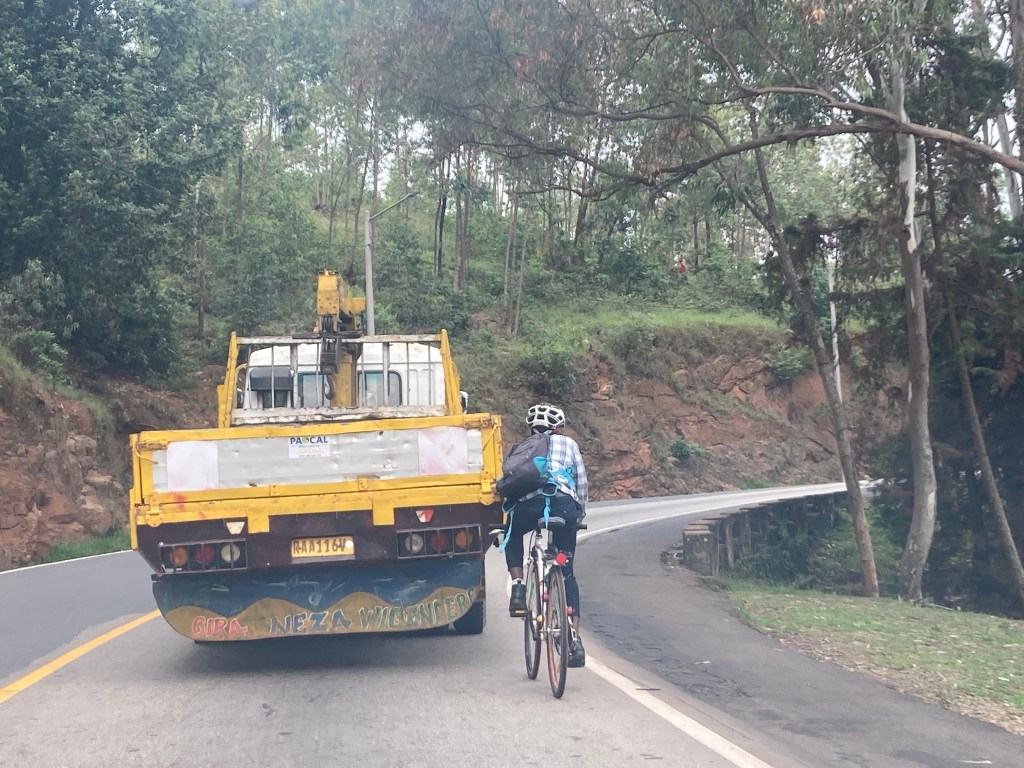
The irony of Kigali’s green reputation resides in its inaccessibility and design priorities. In context, the average flower in the KN 5 Road boulevard receives better shade, water, and respect than a typical pedestrian who walks the same road to work every day. The flowers are irrigated and weeded as needed; the pedestrians are sidelined. Pedestrians, especially those who walk not by choice but by circumstance, exist by design on the literal edges of the city.
As a serial pedestrian and cyclist, I cannot help but see that walking in Kigali is a necessity for people experiencing poverty and a risk for everyone. The urban design is a literal copy of any other modern town, placing pedestrians at the periphery. The hope lies in the part that Kigali is a small, young and malleable city. One that can still choose its identity. One that can ignore the extractive model of car-centred development and reimagine itself as a city that centres its most vulnerable, the majority.
The current pedestrian paths do not prioritise ease, safety, or human experience. They hug the vehicular roads tightly. Pedestrians inhale dust and fumes and often step aside for drainage works and fragmented construction projects. In the city’s most populated areas, the walk paths lack the needed canopies, resting stops, or green corridors that can serve people. In Kigali, walking is turning into a punishment, not a pleasure.
Mobility is currently being designed to fit a car-centric logic. Roads are widened, new flyovers are constructed, and busy intersections are redesigned to ease the movement of cars and reduce traffic. However, this logic does not apply to the pedestrian experience. Cars, which often carry the driver and one other passenger at most, are given options: faster roads, new tunnels and alternative routes. But pedestrians, the basics are neglected. In a city where many people walk to work, pedestrian paths should not parallel the road; they should be liberated from the vehicular logic. Pedestrian paths should seek shortcuts, emphasise scenery, and connect neighbourhoods. Local mobility should prioritise the ease of movement of the body; a direct, beautiful, scaled path.
The green performance is not accidental. To understand this, we must examine the city’s political economy. Kigali’s urban infrastructure is not neutral; it reflects our priorities and values. We have positioned the city as a hub for investments and conferences and a gateway to elite tourism, which is much needed for economic growth. Amidst the search for economic development, we neglected our primary social growth. As such, all the primary infrastructure often caters more to the visiting eyes and pleasure than to local needs and practice. And cars, and their infrastructure, are an objective capital of growth and development, visible markers of growth.
A quick comparison of the vehicular and pedestrian infrastructure reveals the spatial decisions of the ideological heart of the city. While a driver can easily find free or cheap parking in most areas, a low-income citizen will struggle to find a green park or a peaceful path that separates them from the chaos of the cars.
We often cite the city’s green spaces as signs of progress, such as wetland areas repurposed for leisure. But they do little to change the imbalance dynamic. The parks are fenced off, expensive to enter, and most do not allow people to sit on the grass. Some are filled with more maintenance staff than citizens enjoying the shade and breeze. Green spaces have turned into tools for aesthetic performance. It feeds into the hierarchy of visibility, and the city becomes a theatre. The city, and its lush, inaccessible parks, serve as a picture backdrop for international guests and the rich, and the poor pedestrian is left out of the photo frame. Kigali is slowly turning into a stage where nature, like art, is curated, and the human element is left to negotiate silently at the margins.
Kigali should disinherit the problematic belief that walking is for the poor, and vehicles signify wealth and dignity. It creates a vile perception of a city invested in upward optics, rather than horizontal justice. It imagines the ideal urban dweller to be one who drives, a consumer, a delegate, not a citizen on foot, not a child seeking a playground, or teenagers seeking a green space for a picnic. This notion is very colonial, outdated and ultimately destructive.
Most of this city’s residents rely on walking as their primary means of transportation. They are also the backbone of this city’s informal economy. Their movement should not be informalised, marginalised, or penalised. They should not be placed in situations where they walk longer distances beside speeding cars or endure noisy public spaces that subtly or overly exclude them. They should be at the centre of the design, building, and delivery.
Walking is the optimum human performance. There is a reason why we all wait to watch children take their first steps. To walk is to be free, to be alive, and to be healthy. We do not need to stop all cars, block the paths, and declare, “The roads are now free for all to walk.” It just exemplifies that a walker is marginal, neglected, and a peripheral action. One should be able to walk confidently any day, any time.
To transform Kigali and hold the title of its green spaces, we must ask ourselves critical questions. What kind of city are we building? One where pedestrians walk on the edges? One where aesthetics matter more than access? Is one where being green is a performance for the elite? It is not just enough to plant more trees or curate more parks. It is not enough to build more roads or expand the old ones. We need to recenter the human being in the logic of urban design, not the car. Pedestrian infrastructure should be planned with the same rigour and funding as vehicle roads. Parks should be open, touchable and designed for rest, play and community. Grass should be for sitting, picnics and leisure, a nd paths must be for walking. And none should serve only a decorative purpose.
Kigali is a young city, still small and moldable. If we continue designing for cars, we are carving inequality into stone and undoing all we stand for. But if we design for the people, the children, the parents, and everyone, we are planting the seeds of collective dignity. The trees and green spaces in Kigali should not only absorb carbon; they must also absorb the people. They should be welcoming the Kwita-Izina delegate and the vegetable vendor in Kimironko.
To build Kigali and a community that values and respects green spaces, we must step away from the low-trust environment that treats citizens as potential violators of the park rather than co-owners of the city, because in Kigali, we share.
We share history, hope and pride. We share hills, homes and discourses. We should also share access. We should create inclusive green spaces, independent pedestrian paths and mobility systems.
We should recognise that walking is not failure, but a fundamental practice. Until then, Kigali remain a paradox, a theatre, a presentation. A city celebrated for its green credentials, one where green is a privilege, walking is turning into a risk, and mobility is a margin.
(As I write this, I caution Kigali residents to resist the “at-least mentality,’ the temptation to compare Kigali with other failed regional cities. We have done more before, and we cannot settle for less. The “at-least mentality” breeds laziness and complacency. We do not accept the status quo because it surpasses complete inaction. We have shown our capacity for bold, transformative change. Settling for less dishonours our legacy and underestimates our capacity. The bar should not be survival or small wins, but a sustained, meaningful impact. We have done it before, we are doing it now, and we can do it again. )


Leave a Reply to Awoke Cancel reply